



Frequently Asked Questions and Misunderstandings
In Curaçao, the word orthodox easily raise questions or misunderstandings. Therefore, we want to be very clear: OrthodoxCuracao is about Orthodox Christianity and the Orthodox Church.
Orthodox Christianity finds its roots in the Church of the Apostles. The Orthodox Church sees itself as the continuation of this apostolic faith and ecclesiastical life, which has been passed down through the ages in its faith, worship, and sacramental tradition.
Orthodox Christians can be found among many peoples, languages, and cultures. You do not have to be Greek, Russian, Serbian, or Arab to become an Orthodox Christian. The Orthodox faith can also be experienced in Papiamento and within the Curaçao cultural environment while the faith and liturgical tradition of the Church are preserved.
Ancient in its roots. Global in its presence. Focused on Christ.
Below we answer common questions and misunderstandings that may arise when someone encounters Orthodox Christianity for the first time.
1. Is Orthodox the same as Orthodox Jewish?
No. On this website, we mean by orthodox the Orthodox Christianity. The Orthodox Church is Christian and confesses Jesus Christ as the Son of God, who became man, was crucified, and rose from the dead. Orthodox Judaism, on the other hand, belongs to Judaism and is a different religious tradition.
2. Is the Orthodox Church the same as the Roman Catholic Church?
No. There are clear similarities: both have very ancient Christian roots and recognize bishops, priests, sacraments, and a liturgical worship service. However, there are significant differences in theology and church governance. The Orthodox Church and the Roman Catholic Church are currently not in full ecclesiastical communion with each other.
3. Did the Orthodox Church originate from the Roman Catholic Church?
History is not quite that simple. During the first millennium, the Christian churches of East and West were part of the same ancient Christian world, even though differences existed in language, culture, and ecclesiastical practices.
The distance between East and West grew over many centuries. The year 1054 is often cited as a significant moment in the split between the two, but the separation was a prolonged historical process.
4. Does the Orthodox Church have a pope or one world leader?
No. The Orthodox Church has bishops, metropolitans, and patriarchs, but does not have a bishop with the same universal authority that the pope possesses within the Roman Catholic Church.
The Church is synodal governed: bishops share collective responsibility for church life. For Orthodox Christians, Christ is the Head of the Church.
Do you have to be Greek, Russian, Serbian, or Arab to become Orthodox?
Orthodox Christianity does not belong to one people, skin color, language, or nationality. Labels such as Greek Orthodox, Russian Orthodox, Serbian Orthodox, and Antiochian Orthodox refer to historical church traditions and local churches.
A person from Curaçao does not need to become Greek, Russian, Serbian, or Arab to be an Orthodox Christian. The Orthodox faith can also be experienced and celebrated within our own language and Curaçaoan culture. Prayers, readings, hymns, and religious education can take place in the language that people understand, while preserving the content of faith and the liturgical tradition of the Orthodox Church.
Being Orthodox does not mean that you have to leave behind your Curaçaoan identity. You can be fully Curaçaoan and fully Orthodox Christian at the same time. The Church is not for one people, but brings together people from different nations and languages in the same faith in Christ.
6. Are Greek, Russian, and Serbian Orthodox different faiths?
No, as far as we are speaking about the local churches that belong to the Eastern Orthodox Church. They share the same orthodox faith and sacramental church life.
The language, singing, calendar, and certain local customs may differ. This is precisely why an orthodox service in Greece may look or sound different in some respects than a service in, for example, Serbia, Romania, or the Middle East.
7. Do orthodox Christians worship images and icons?
No. Worship is due only to God.
Icons are not gods, and orthodox Christians do not believe that wood and paint are divine. When someone kisses an icon of Christ or bows before it, the honor is directed to Christ who is depicted on it.
This may initially seem unusual for someone coming from a Protestant or evangelical background. Within orthodox Christianity, the use of icons is closely related to the Incarnation: the invisible God has truly become human in Jesus Christ and has appeared visibly among us.
8. Do orthodox Christians worship Mary?
No. Mary is not worshiped as God.
She is particularly honored and is Theotokos, Mother of God, is named. That ancient Christian title ultimately says something primarily about Jesus Christ: The One who was born of Mary is not merely a man, but God who has truly become man.
There is a distinction between the worship that belongs solely to God and the special honor given to Mary and the saints.
Do orthodox Christians believe in the Bible?
Certainly. The Holy Scripture holds a central place in the life of the Orthodox Church.
During the Divine Liturgy, portions from the apostolic writings and the Gospel are read. Many prayers and hymns are also taken directly from or are strongly based on biblical texts.
The difference with some other Christian traditions is primarily that the Bible is read within the Orthodox Church within the living faith and the Holy Tradition of the Church..
10. Do Orthodox Christians believe that they can earn heaven through good works?
No. Salvation is a gift of God's grace and cannot simply be earned through human achievements.
At the same time, Orthodox Christianity does not see faith as something that exists only in thoughts. Faith takes shape in life: in repentance, prayer, love, forgiveness, mercy, and good works. The Christian life is a response to God's grace.
11. Isn't Orthodox worship just a lot of old ritual?
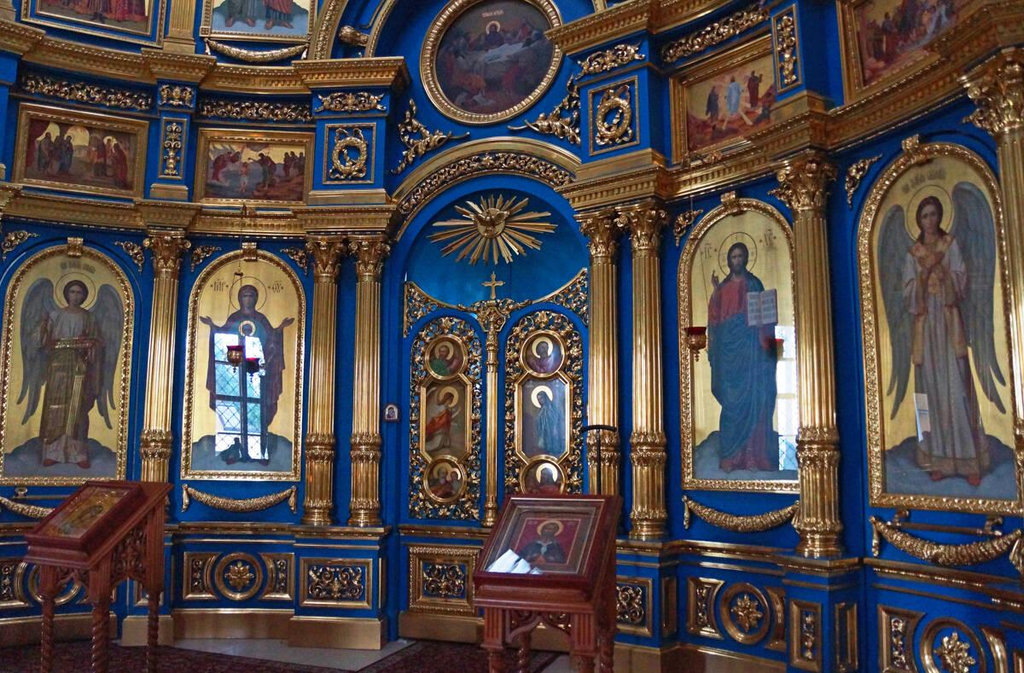
For someone entering an Orthodox church for the first time, it can indeed be overwhelming: icons, candles, incense, chanting, making the sign of the cross, bowing, and processions.
But these liturgical elements are not intended as a performance or decoration. The Orthodox worship service involves the whole person in prayer with body and soul.
Moreover, you do not need to know immediately when to stand, make the sign of the cross, or bow. As a visitor, you may quietly observe, listen, and get acquainted. The precise practices may vary by local Orthodox tradition.
12. But isn't there almost no Orthodox community in Curaçao?
In Curaçao, Orthodox Christianity is much less visible than, for example, Roman Catholic, Protestant, and Evangelical Christianity. As a result, Orthodox Christians or people interested in the Orthodox faith have difficulty finding each other.
In Curaçao, there is an Orthodox mission community: the community of Saint Anna, next to the Catholic church Santa Famia in Willemstad. You are welcome to get acquainted, pray together, and learn more about the Orthodox faith.
OrthodoxCuracao helps people find the community, the services, and each other. Check the services and location, or contact us with a practical question.
See also: Misconceptions about the Holy Communion