



Information about Orthodoxy
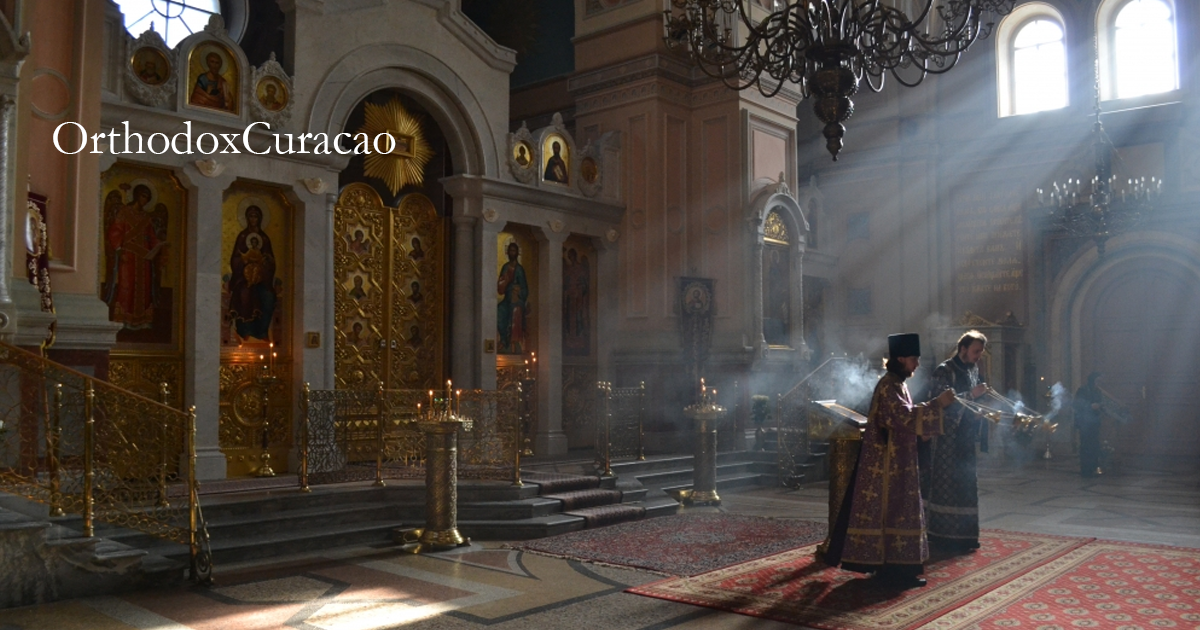
The Orthodox Church is not a modern denomination that appeared at some later point beside other churches. She understands herself as the continuation of the apostolic Church: a community living from Christ, Holy Scripture, received Tradition, prayer, the Mysteries, and the Divine Liturgy. This page follows that history and faith step by step — from the apostles to everyday Orthodox life.
1. From Christ and the apostles to the Church today
The Orthodox story does not begin with a national church, a patriarchate, or a later reform, but with Jesus Christ and the apostles. In the New Testament we see local churches emerging that share one faith, one baptism, one Eucharistic life, and a common apostolic proclamation. Bishops, priests, and deacons receive an enduring ministry of service, preaching, and guarding the faith.
The first centuries were at once centuries of growth, persecution, theological conflict, and councils. The Church had to express more precisely what she already confessed in prayer and proclamation: who Christ is, how the Father, Son, and Holy Spirit are confessed, and how the Gospel is faithfully handed on. The great Ecumenical Councils therefore do not stand apart from the early Church; they belong to the process by which the Church articulated and defended the faith she had received.
Orthodoxy therefore does not simply say, “we preserved an old style,” but rather, “we seek to receive, guard, and hand on the same apostolic faith and ecclesial life.”
2. One, holy, catholic, and apostolic
In the Nicene-Constantinopolitan Creed the Church confesses herself to be one, holy, catholic, and apostolic. These four words are not advertising slogans but a concise summary of how the Church understands her identity. They belong together: unity without holiness becomes organization, holiness without catholicity becomes isolation, and apostolicity without living unity becomes mere history.
One
According to Orthodox faith, the unity of the Church is rooted in Christ and the Holy Spirit. It is made visible in a common confession of faith, sacramental life, and the communion of local churches. The Orthodox Church has no pope with universal jurisdiction over all bishops; bishops serve together in synodal structures, and local churches live in communion with one another.
Holy
“Holy” does not mean that every member of the Church is without sin. The holiness of the Church comes from Christ, who calls her to repentance and new life. That is precisely why Orthodox life places such emphasis on confession, fasting, prayer, forgiveness, and beginning again. The failures of Christians need not be hidden in order to confess the holiness of God.
Catholic
The word “catholic” is older than the later division between Rome and the East. In Orthodox usage it points to the fullness and wholeness of the faith and to the Church that is truly present in each local Eucharistic community without being detached from the whole. For this reason Orthodox Christians may also speak of the Orthodox Catholic Church, without meaning Roman Catholic.
Apostolic
Apostolic means both “sent” and “in continuity with the apostles.” The Church does not reinvent her Gospel in every generation. She guards the apostolic proclamation and the episcopal ministry that reaches historically back to the earliest Christian communities. At the same time she remains sent: the faith is not preserved in order to be locked away, but to be lived and proclaimed.
3. Why is the Church called “Orthodox”?
“Orthodox” comes from Greek and can point both to right or true belief and to right glorification. In the Church, doctrine and worship therefore belong together. What Christians say about God should be recognizable in how they pray, and how they pray shapes how they believe and live. Orthodoxy is therefore more than possessing correct answers: it is a way of life in which truth and worship sustain one another.
4. Scripture and Holy Tradition
The Orthodox Church does not set the Bible against Tradition. Scripture is the inspired written witness that is read, sung, preached, and prayed at the heart of Tradition. Before the New Testament existed as a complete collection, the Church already lived from apostolic preaching, Baptism, the Eucharist, and prayer. The canon of Scripture was recognized and received within that ecclesial life.
Holy Tradition does not declare every custom sacred. Local customs can change. The core of Tradition is the life of the Gospel as received by the Church: Scripture, the Creed, the councils, liturgical worship, the witness of the Fathers, the saints, and iconography. Tradition in this sense is not a museum, but living transmission.
5. Prayer, liturgy, and biblical worship
Someone attending an Orthodox service for the first time often notices that almost everything is sung or prayed. Worship is saturated with Scripture: psalms, readings, biblical images, hymns, and prayers follow one another. The Church does not regard earthly liturgy as theatre, but as participation in the praise of God in which heaven and earth are drawn together.
The Divine Liturgy stands at the centre of Eucharistic life. The community gathers to hear the Word, give thanks to God, pray for the world, and celebrate the Eucharist. For Orthodox Christians the Liturgy is therefore not merely one activity of the Church among others; it reveals what the Church is at her deepest level: a people gathered in Christ to worship God and receive His life.
6. The Eucharist and the Holy Mysteries
The Orthodox Church often speaks of “Mysteries” where Western Christianity usually says “sacraments.” Baptism, Chrismation, Eucharist, Confession, Marriage, Holy Unction, and Ordination are commonly named as seven principal Mysteries, but God’s grace is not confined to a list. The whole life of the Church has a sacramental character: visible things can become bearers of God’s invisible grace.
Holy Communion is the most intense expression of ecclesial unity. For that reason, in Orthodox practice it is normally received by Orthodox faithful who are in full communion with the Church and have prepared according to the guidance of their priest. Everyone is welcome to attend the services; the boundary around Communion is not meant as rejection of visitors, but expresses that Eucharist and full ecclesial communion belong together.
7. The Mother of God, the saints, prayer for the departed, and Confession
In the Orthodox Church the Virgin Mary is called Theotokos: “God-bearer” or “Mother of God.” The title first of all says something about Christ: the one she bore is truly God the Son who became human. Mary is therefore honoured in a unique way, but she is not worshipped. Worship belongs to God alone.
The saints are honoured as witnesses of what God’s grace can accomplish in a human life. Orthodox Christians ask their intercessions in the same spirit in which Christians ask one another for prayer on earth. The same sense of communion in Christ underlies prayer for the departed: death does not destroy love in Christ. In Confession a believer confesses sins before God in the presence of a priest, who as witness and minister proclaims ecclesial reconciliation and Christ’s forgiveness.
8. Why icons?
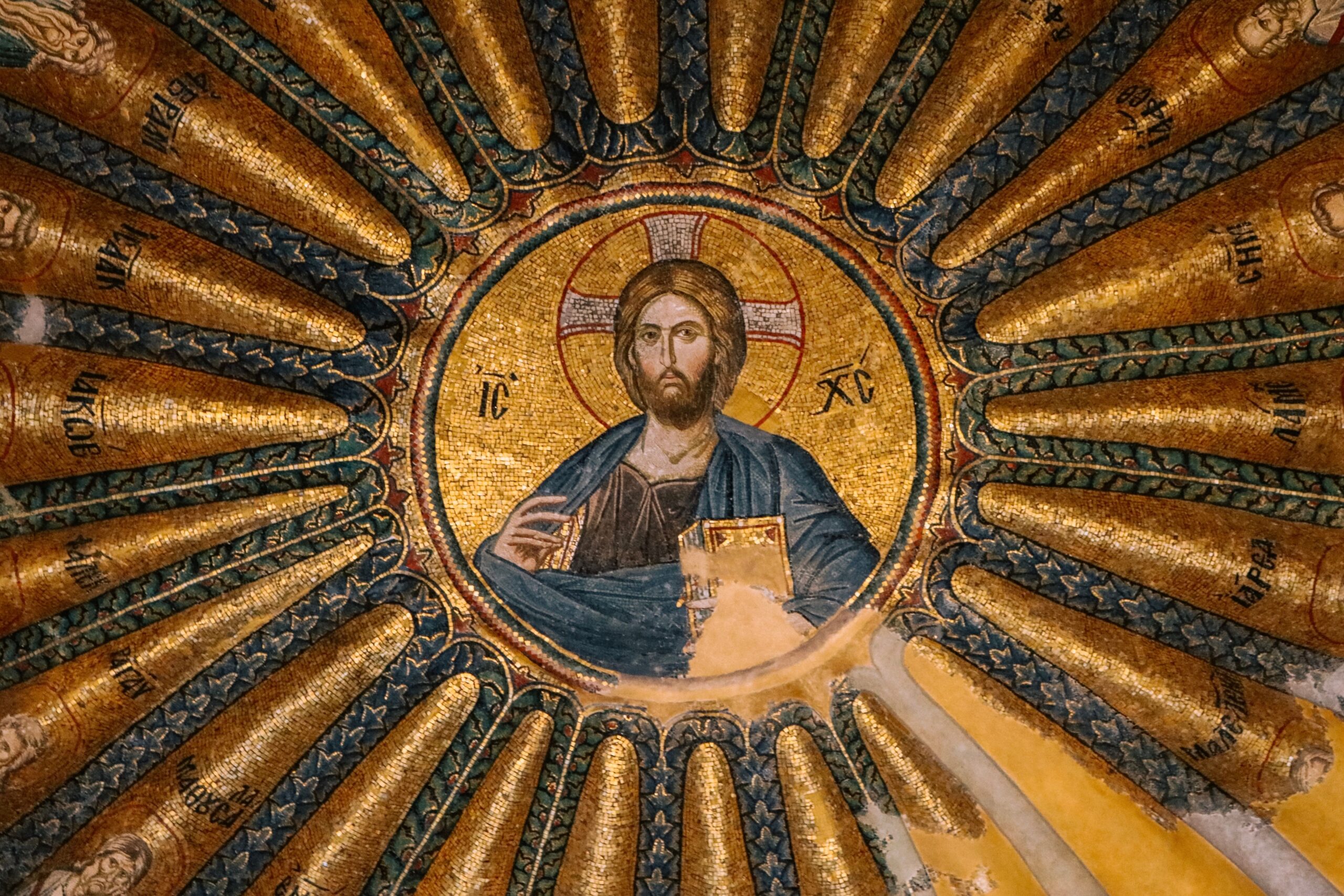
Icons are neither decorative religious paintings nor idols. They belong to the faith in the Incarnation: because the Son of God truly became human and lived visibly among us, He can be depicted. An icon does not aim at photographic realism; it uses an ecclesial visual language that helps the believer to look toward the Kingdom of God.
When an Orthodox Christian kisses an icon or bows before it, the honour is not given to wood and paint but to the person represented. This distinction between veneration and worship is fundamental. God alone is worshipped; holy persons and sacred images are honoured in relation to Him.
9. Roman Catholic, Protestant, or “Eastern”?
The Orthodox Church does not fit neatly into the Western scheme of “Catholic or Protestant.” The division between Eastern and Western Christianity developed over many centuries and became visible in questions of ecclesial authority, theological formulations, and church culture. The Reformation arose later within Western Christianity and was primarily addressing problems within that Western context.
Names such as “Greek Orthodox,” “Russian Orthodox,” and “Serbian Orthodox” usually refer to local churches or jurisdictions within the same Orthodox Church. Language, music, and customs may differ, while the faith and sacramental life belong in principle to the same ecclesial communion. On Curaçao this international reality is especially relevant, because Orthodox faithful may come together from different countries and traditions.
10. Ancient faith in a modern world
The fact that the Orthodox Church preserves ancient prayers, councils, and liturgical forms does not mean that she only looks backward. The deeper question is whether truth about God and the human person must be reinvented in every age. Orthodox Christians believe that the Gospel can address every culture and every period without losing its core.
The Orthodox vision of human life is ultimately directed toward communion with God. The word theosis is often used for this: participation in divine life by grace. It does not mean that a human being becomes God by nature, but that through Christ and the Holy Spirit the person is healed, sanctified, and increasingly comes to live as he or she was created to live. Prayer, the Mysteries, fasting, love of neighbour, and repentance all belong to this path.
11. How does someone become Orthodox?
The normal path toward reception into the Orthodox Church does not begin with a form, but with time. A person attends services, comes to know a parish community, speaks with a priest, and receives catechesis. The length of this process differs from person to person. The Church should not pressure someone into making a rapid decision; faith is to be received freely and consciously.
Baptism, Chrismation, and the guidance of a priest
The way a person is finally received — through Baptism and Chrismation or, in some situations, through Chrismation or another canonically established form — belongs to the pastoral and canonical responsibility of the competent Orthodox priest and bishop. A website cannot make that personal decision. Anyone considering this step therefore needs real ecclesial contact.
A patron saint and a sponsor
When someone is received into the Church, an Orthodox sponsor often has a role, and a patron saint is chosen or confirmed. This is not a decorative detail. The sponsor helps the person in ecclesial life; the patron saint is a concrete reminder that Christian faith is lived by real people in real times and places.
12. A first visit to an Orthodox church
Visitors are welcome. Someone entering for the first time does not need to know every gesture and need not imitate everyone else. The most important thing is to be present attentively and respectfully. In many Orthodox churches people stand for much of the service; sitting is of course appropriate when health, age, or circumstances require it. Dress customs vary by local culture, but simple, neat, and respectful clothing is a good guideline.
The sign of the cross, bows, veneration of icons, and lighting candles are forms of bodily prayer. A visitor may simply observe and learn. When in doubt, ask a priest, deacon, or experienced parishioner what is customary in that particular parish; Orthodox customs are not identical everywhere.
13. Everyday Orthodox life
Prayer and Scripture
Orthodox Christian life continues at home. Many faithful keep a regular place of prayer with an icon of Christ, the Mother of God, and perhaps their patron saint. Morning and evening prayer, reading Scripture, and short prayers throughout the day help prevent faith from becoming detached from ordinary life. The extent of a prayer rule is best built soberly and gradually.
Fasting and feasts
The church year alternates feasts and fasts, with Pascha, the feast of Christ’s Resurrection, at its centre. Fasting is neither an end in itself nor a dietary contest. It joins simplicity in food with prayer, almsgiving, self-control, and attentiveness to one’s neighbour. The concrete fasting rule may differ because of health, age, and circumstances and is best practised with pastoral wisdom.
14. Orthodox faith on Curaçao
OrthodoxCuracao is a private initiative intended to connect Orthodox Christians and interested people on Curaçao and to make reliable information more accessible. It is not a parish, a diocese, or a substitute for a priest. For sacraments, spiritual guidance, canonical questions, and official ecclesial decisions, contact with competent Orthodox clergy is necessary.
Precisely because Curaçao is small and international, Orthodox life there may look different from countries with established parishes. The first step is therefore simple: make visible who is present, listen to the need, build connections, and promise nothing ecclesiastically that only a competent bishop or priest can decide.
15. Where should I begin?
Someone curious about the Orthodox Church does not need to understand everything first. When possible, attend a real Orthodox service, read the Gospel, ask questions, and take your time. Orthodoxy is ultimately not learned as an external theory, but through prayer, encounter, and participation in the life of the Church.
16. God as Trinity and the human calling
Orthodox faith does not begin with a technique for improving life but with God Himself. The Church confesses one God: Father, Son and Holy Spirit. This is neither a calculation of three gods nor one solitary God appearing now as Father, then as Son, then as Spirit. The three divine Persons are truly distinct and yet one in essence, will and glory. Love is therefore not an optional theme in Christianity; communion and self-giving belong to what has been revealed about God. The human person, created in God's image, is likewise called into relationship with God, neighbour and creation.
The goal of Christian life is often described in Orthodox tradition by the word theosis: participation in the life of God by grace. This does not mean that a human being ceases to be a creature or becomes God by essence. It means that the whole human person can be healed, illumined and sanctified by divine grace. Prayer, the Mysteries, fasting, almsgiving, forgiveness and concrete acts of love are not separate achievements by which we collect religious points; together they form a path on which a person learns to entrust himself to God and to be conformed more deeply to Christ.
17. Creation, sin, incarnation and salvation
Orthodox theology speaks of sin not only as the breaking of a rule but also as sickness, estrangement and bondage to death. Humanity's rupture with God affects mind, will, body, relationships and the way we inhabit the world. Salvation is therefore greater than a merely legal acquittal. In Jesus Christ the Son of God truly assumes our human nature. He lives, suffers, dies and rises as true God and true man, so that human nature is restored in Him and the power of death and corruption is broken.
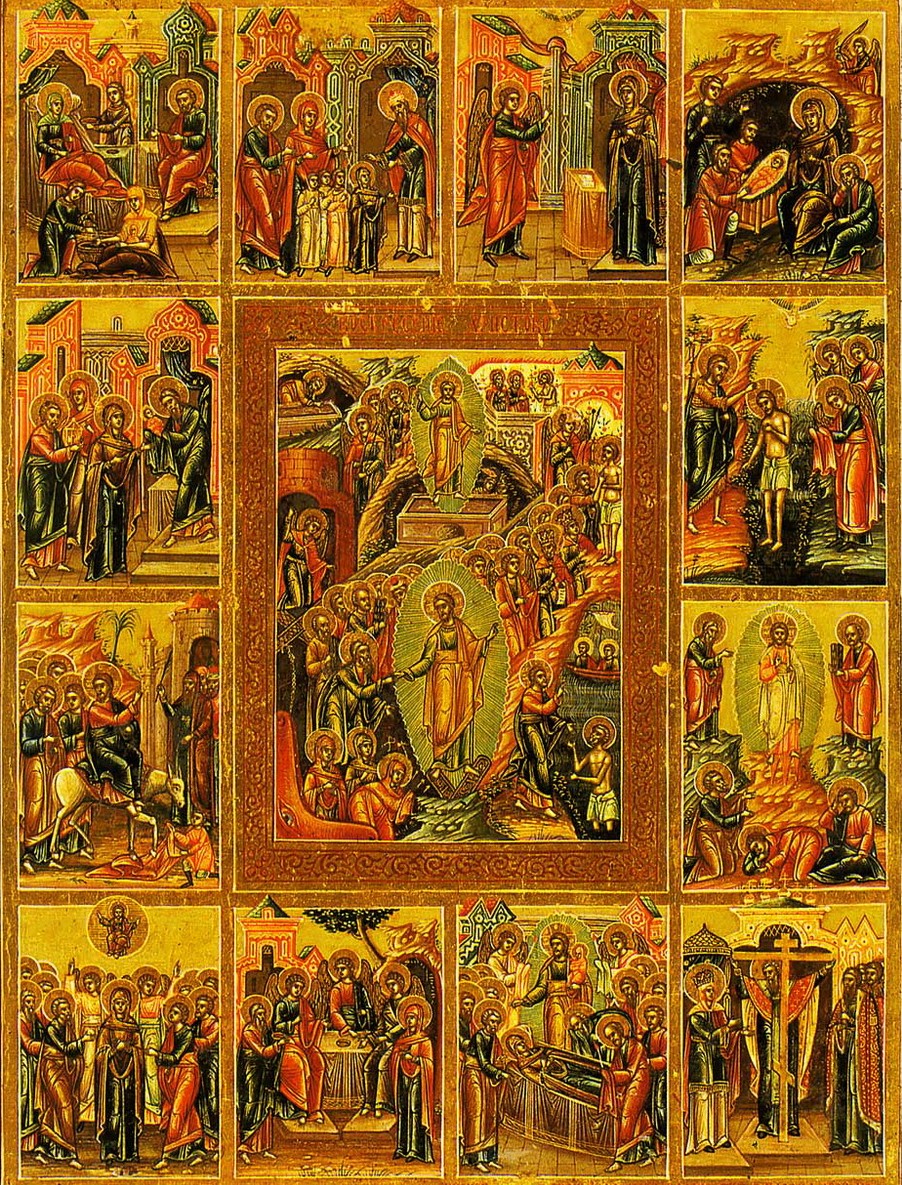
For this reason Pascha, the Resurrection of Christ, stands at the heart of the Orthodox liturgical year. The Church does not merely sing that Jesus was alive again after dying, but that He passed through death and defeated it from within. Christian hope is therefore bodily and cosmic: the resurrection of the dead, the renewal of creation and eternal life in communion with God. Cross and Resurrection cannot be separated. Orthodox Christian life seeks the joy of Pascha not by denying suffering but by allowing everything to be transformed in Christ.
18. Why the Church is both visible and spiritual
In Orthodox understanding the Church is not an invisible idea that later acquired organisations. She is the Body of Christ gathering concretely around bishop, priest, Gospel and Eucharist. Yet she is more than an institution, because her life comes from the Holy Spirit. For that reason the Church cannot be judged entirely by administrative quality, the failures of individual believers or the cultural style of a local community. Holiness does not mean that every church member behaves in a holy way; it means that Christ is holy and that the Church is called to draw human beings into His life.
Local Orthodox churches therefore display real diversity in language, chant, calendar usage and customs, while recognising one another in the same confession of faith, sacramental communion and apostolic structure. Labels such as Greek, Russian, Serbian or Antiochian usually refer to jurisdiction, history or liturgical culture, not to different faiths. For a visitor it is more useful to ask whether a community is canonically Orthodox and to which bishop it belongs than to draw conclusions from language or ethnicity.
19. The Bible in worship and daily life
A first-time visitor to an Orthodox service may not immediately realise how much Scripture is being heard. Psalms form the skeleton of the daily offices, readings from the Apostle and Gospel have an established place, and prayers and hymns are saturated with biblical language. The Church therefore does not read Scripture only in a separate study session; she prays with it. This also explains why Orthodox interpretation rarely begins with an isolated verse. A passage is heard within the whole of Scripture, in its liturgical setting and alongside the Church's witness through the centuries.
For personal use, regular and sober reading is more important than consuming large quantities in a short time. A simple rhythm — perhaps a daily Gospel passage, the apostolic reading and a psalm — can be more fruitful than an ambitious plan abandoned after two weeks. Difficult texts need not be solved alone. The Church has the commentaries of the Fathers, the liturgical cycle and the guidance of priests and experienced believers. Reading Scripture should lead toward prayer, repentance and obedience to Christ, not merely toward collecting information.
20. What happens in the Divine Liturgy?
The Divine Liturgy is the Eucharistic assembly of the Church. It has a clear movement: preparation, proclamation of the Word, common prayer, the offering of bread and wine, thanksgiving, invocation of the Holy Spirit and Holy Communion. The faithful are not an audience watching a religious performance. Even when a choir carries much of the singing and the priest says particular prayers, the whole gathered Church bears the service through attention, responses, signs of the cross, bows, singing and above all inward prayer.
Not everyone present automatically receives Communion. In the Orthodox Church participation in the Eucharist expresses full ecclesial communion: a shared faith, sacramental life and belonging to the Church. Visitors are warmly welcome to attend, listen and pray along as they are comfortable, but the Holy Gifts are received only by Orthodox Christians who are prepared according to the practice of their church. Anyone uncertain can simply ask the priest before or after the service what is customary in that parish.
21. Attending a first service: what do you need to know?
A visitor does not need to learn every gesture or rule in advance. If possible arrive a little before the beginning, silence the phone and choose a place where you can stand or sit quietly without blocking a passage. In many Orthodox churches people stand for much of the service, but anyone unable to stand for long may sit. Simple, neat clothing that does not deliberately draw attention is generally appropriate. Local customs concerning head coverings, candles, icons and seating differ; observe quietly without forcing yourself to imitate everything at once.
During the service people may move forward to light a candle or venerate an icon. Do so only if you wish and at a moment that does not disturb the service. At the end the priest often gives a blessing and blessed bread may be distributed; the exact custom varies by parish. The most important thing on a first visit is not to perform every external action correctly but to be attentively present. If something is unclear, ask afterwards. Orthodox worship becomes far more intelligible through repeated attendance than by trying to explain everything during one visit.
22. Icons, candles and the shape of an Orthodox church
An Orthodox church building is catechesis in space. The iconostasis is not merely a barrier; it marks the relationship between nave and altar and presents Christ, the Mother of God, saints and feasts as witnesses of the Kingdom. The Royal Doors open and close at appointed moments, processions connect altar and people, and light, incense, chant and bodily posture all speak. None of this exists simply to produce an exotic atmosphere, but to make the faith visible, audible and bodily.
At home many Orthodox Christians also set aside a regular place for prayer, often with an icon of Christ and the Mother of God, a cross, a Bible and perhaps icons of saints. Such a prayer corner is neither a miniature temple nor a magical object. Its purpose is simple: the home gains a place where one consciously stands before God, gives thanks, repents and prays for others. A modest corner that is actually used is spiritually more useful than an impressive collection of religious objects that remains mainly decoration.
23. Mary, the saints and prayer for the departed
The Orthodox Church worships only the triune God. The veneration of Mary and the saints has another meaning: the Church honours God's work in human beings who faithfully followed Him and asks their prayers just as Christians on earth ask one another to pray. Mary has a unique place because she is the Theotokos, the God-bearer: from her the Son of God truly took human nature. The titles of honour given to her are therefore ultimately Christological, safeguarding the confession that Jesus Christ is truly God and truly man.
The departed are likewise not forgotten in the Church's prayer. Death ends the earthly form of our relationships, yet the Church entrusts the departed to God's mercy and commemorates them in the Liturgy and other services. Such prayer is not an attempt to manipulate God's judgement. It is an expression of love, hope in the resurrection and the conviction that in Christ the communion of the Church is not reduced to the living people we can presently see.
24. Confession, spiritual guidance and personal responsibility
In Confession the believer names his or her sins before God in the presence of a priest. The priest is not the owner of forgiveness, nor a psychologist who solves every life problem. He witnesses the believer's repentance, prays for forgiveness and pronounces the Church's absolution according to the received order. Regular confession helps a person become concrete: the focus is not 'the world' or 'other people' but my own words, actions, omissions and desires that must be brought before Christ.
Spiritual guidance requires both trust and maturity. A priest or spiritual father can help establish a rule of prayer, fasting practice and sacramental rhythm suited to a person's circumstances. This is not the same as treating every piece of personal advice as infallible. Orthodox tradition has deep reverence for obedience, especially in monastic life, but also for sobriety, discernment and ecclesial responsibility. Anyone facing serious medical, psychological, legal or safety problems should also seek appropriate professional help.
25. Fasting, feasting and the rhythm of the Church year
The Orthodox liturgical year teaches that the body participates in spiritual life. There are times of celebration and abundance, but also periods of restraint and simplification. Fasting is therefore neither a diet nor a competition in strictness. Its goal is freedom: learning that desires are not automatic commands, making room for prayer and almsgiving, and directing attention toward Christ. The precise fasting rule can be adapted for health, age, pregnancy, work and other circumstances; beginners in particular should not impose an extreme rule on themselves without guidance.
Feasts are the other side of the same rhythm. Every Sunday is a little Pascha, and throughout the year the Church celebrates the great events of salvation and commemorates saints each day. Time is thus not experienced as empty or neutral but sanctified by memory and expectation. The Church year returns, yet not as a circle in which nothing changes. Each year the same proclamation meets a different person: someone who has grown older, suffered, become more grateful or must begin again.
26. Becoming Orthodox without haste
A person does not become Orthodox merely by agreeing with an opinion or signing a form. Reception is entry into the life of the Church. There is therefore normally a period of acquaintance and catechesis, whose length varies. Someone who has participated seriously for years and received instruction is in a different position from someone who discovered Orthodoxy through a video last week. The priest is not trying to meet a sales target but to discern whether a person understands the faith, chooses freely and is ready actually to live it.
The manner of reception can also differ. A person who has never received Christian baptism is baptised and chrismated; for those already baptised in another Christian community the competent Orthodox bishop or priest determines, according to ecclesial guidelines, how they are received. A website cannot make that final decision for an individual. The same is true of choosing a baptismal or patron saint, making a first Confession and preparing for the Eucharist: these are personal steps within a concrete parish.
27. Orthodox life in Curaçao: faithfulness without copying folklore
Orthodoxy is not bound to one people, climate or aesthetic. A community in Curaçao does not need to imitate Greek, Russian or Romanian culture in order to be Orthodox. What must be received and preserved is the apostolic faith, sacramental and liturgical order, and ecclesial communion. Language, local musical sensibility, hospitality, practical organisation and pastoral questions can then acquire a genuinely Curaçaoan expression. Inculturation does not mean diluting the faith; it means living it concretely where people actually live, without unnecessary cultural barriers.
Where a stable parish structure does not yet exist, caution is especially important. A website, friendship network or private initiative can inform people, collect questions and help make connections, but it does not replace bishop, priest and parish. The healthy next step is therefore not to recreate a complete ecclesial reality online, but to establish relationships with canonical Orthodox clergy, make real services possible with regularity and allow a community to grow step by step. What becomes durable does not have to begin spectacularly.