



IMAGES OF FAITH, PRAYER, AND REMEMBRANCE
Anyone entering an Orthodox church will almost immediately see icons of Christ, the Mother of God, angels, apostles, and saints. They are placed on the iconostasis, hung on the walls, and are also used in Orthodox homes as part of personal prayer life.
An icon, however, is more than religious decoration. Within the Orthodox Church, the icon is part of the faith life of the Church. Through color, symbolism, and traditional representations, it points to Christ and to the reality of the Kingdom of God.
Icons are therefore often described as windows to heaven: not because the wood or the paint is holy in itself, but because the image directs our attention to the one who is depicted.
WHAT IS AN ORTHODOX ICON?
"Christ is the image of the invisible God, the firstborn over all creation" (Col 1:15)
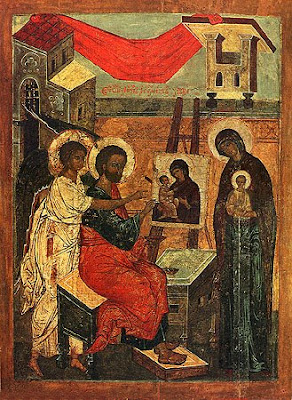
The word icon comes from the Greek word eikōn (image), that image of image means.
The Greek word eikōn means image or picture. In the New Testament, this same word is used when the apostle Paul writes about Christ: "He is the image of the invisible God" (Colossians 1:15).
This touches on the core of the orthodox view of icons. God has not merely remained an abstract idea: in Jesus Christ, the Son of God truly assumed our human nature and has appeared visibly among people. Therefore, Christ can be depicted according to His human appearance.
Icon art can also be seen as a human gift dedicated to God. Just like prayer, singing, and church building, color, form, and painting can also be used to express faith. An icon aims not only to capture an event from the past but also to direct the viewer's attention to the reality of Christ and the Kingdom of God.
Orthodox icons primarily depict:
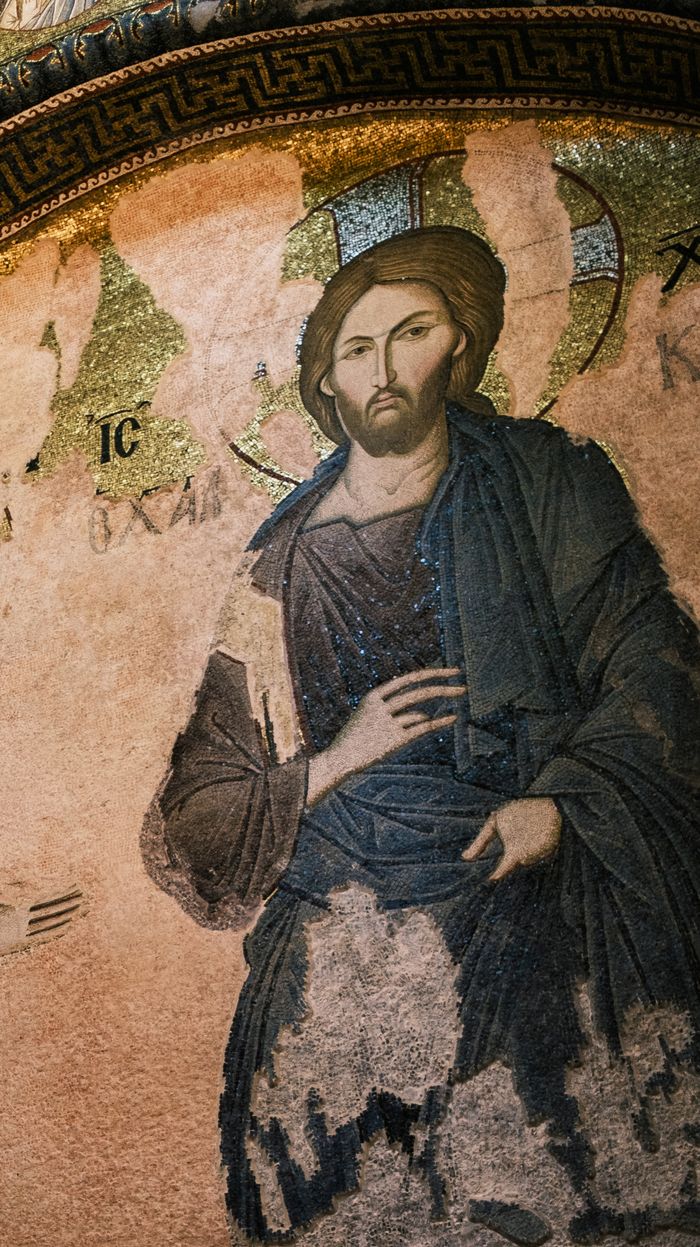
- Jesus Christ
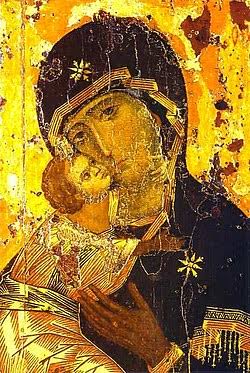
2. The Mother of God (Theotokos)
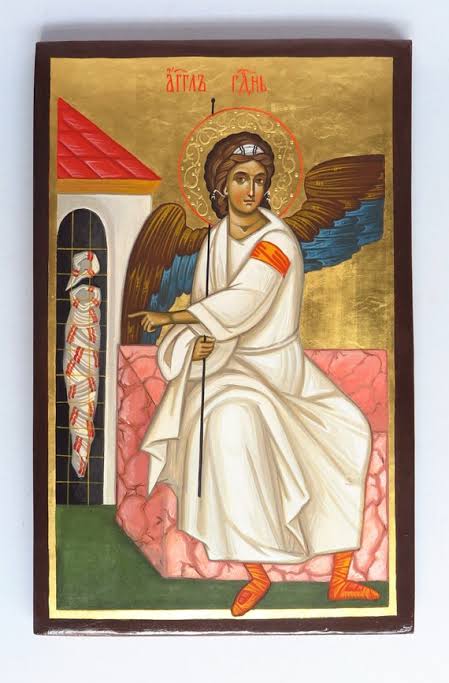
3. Angels (Archangel Gabriel)
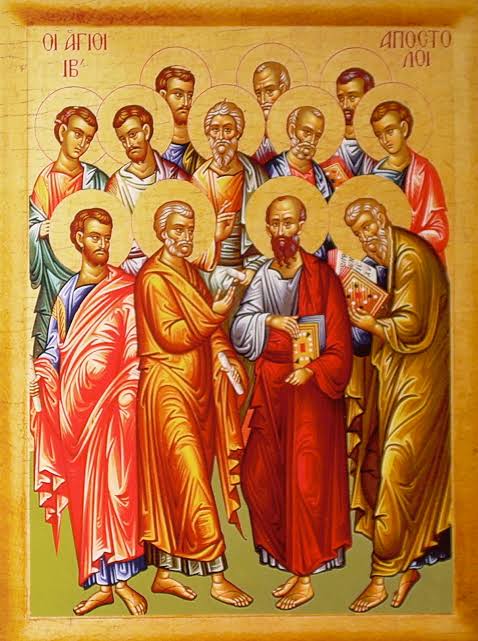
4. Apostles (The Twelve)
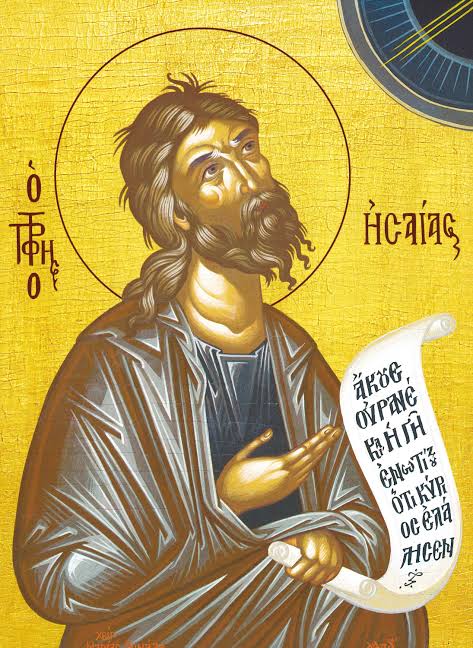
5. Prophets (Isaiah)
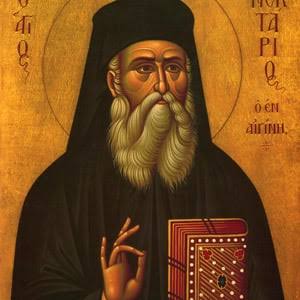
6. Saints (St. Nektarios of Aegina)
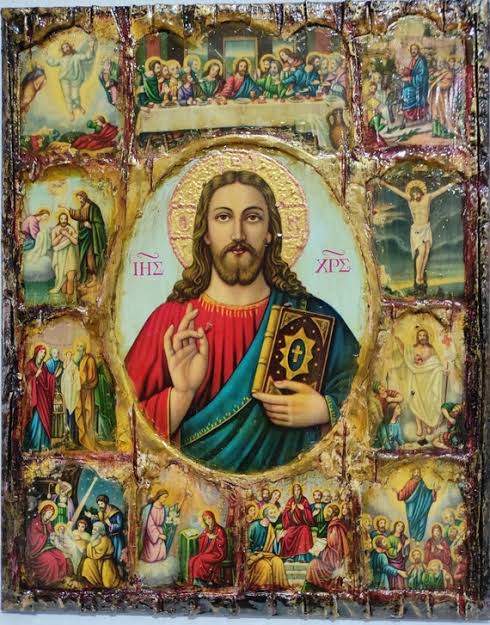
7. events from the life of Christ
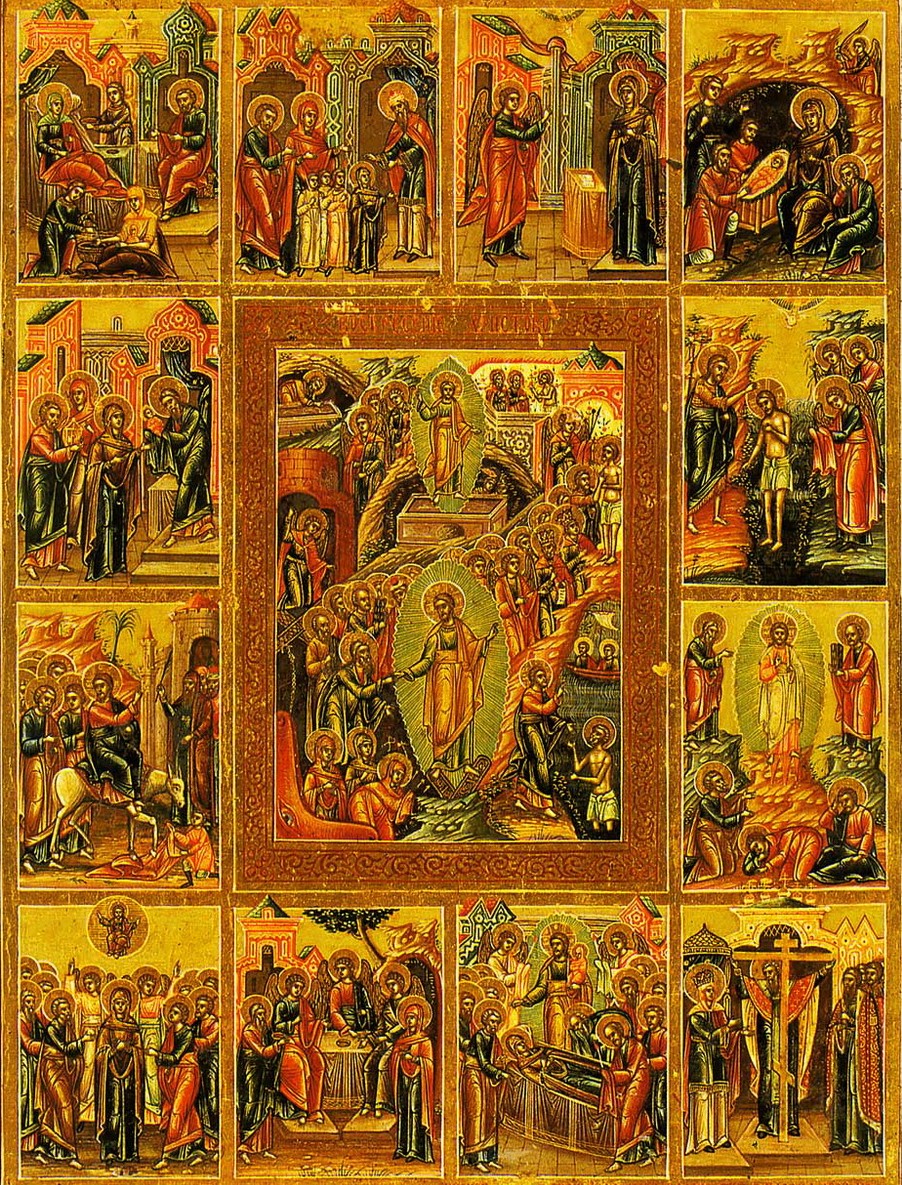
8. Biblical and Church Festivals (Russian icon depicting the Resurrection and the Twelve Great Feasts, ca. 1903.)
An orthodox icon usually does not attempt to represent someone as realistically as a modern portrait or a photograph. Traditional iconography employs its own visual language in which posture, colors, gestures, clothing, and background often have a theological meaning.
However, not all Orthodox icons look the same. Some icons clearly have more Western characteristics., such as more naturally painted faces, shadows, depth perspective, and a more realistic representation of the body. This is because Orthodox icon painters came into contact with the art of the Renaissance, the Baroque, and later European academic painting in various periods and regions. Especially from the seventeenth century onwards, such influences became visible in parts of Greece, the Balkans, Ukraine, and Russia.
Therefore, one can find both strongly Byzantine-styled icons and more naturalistically painted examples within the Orthodox world. Despite these differences in style, the primary goal remains the same: not only to create a beautiful religious image, but by the visible reference to the spiritual reality of the Christian faith.
WHY ARE ICONS IMPORTANT?
The deepest basis for the use of icons for Orthodox Christians lies in the the incarnation of Jesus Christ.
The Christian faith proclaims that the invisible God truly became man in Jesus Christ. Christ could be seen, touched, and heard. He truly lived as a man among us.
Therefore, Christ can also be depicted.
This became particularly important during the discussions about icons in the early Middle Ages. Saint John of Damascus explained that Christians do not attempt to depict the invisible divine nature, but can depict Christ because He has truly become man.
The icon is ultimately connected to the confession:
God has truly become man.
IMAGES IN THE OLD TESTAMENT
When it comes to icons, there is sometimes reference to the prohibition of carved images in the Ten Commandments. Israel was not allowed to make an image to that to worship GodThe prohibition was aimed at idolatry: man was not to make a created image and then give it the honor that belongs only to the true God.
In Deuteronomy, Moses explicitly warns the people of Israel not to make an image of God according to their own design. He reminds them that when God spoke to them at Horeb, had not seen any visible form (Deuteronomy 4:15–16).
This is important for the Orthodox understanding of icons. The issue was not simply that every image would be forbidden; after all, God commanded the depiction of cherubim, for example, elsewhere. Rather, the invisible God should not be represented according to human imagination.
This is important for the Orthodox understanding of icons. The issue was not simply that every image would be forbidden — elsewhere, God indeed commanded the depiction of cherubim, but the invisible God was not to be represented according to human imagination.
With the coming of Christ, a new situation arises according to orthodox theology: the Son of God has truly taken on human formHe was seen, heard, and touched. Therefore, Christ can be depicted in His human form.
The cherubim on the Ark of the Covenant
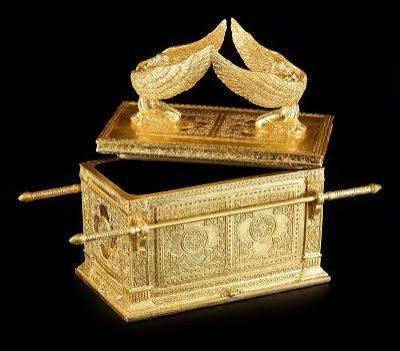
During the construction of the tabernacle, Moses was instructed to make two golden cherubim to be made on top of the Ark of the Covenant:
"Make two cherubs of gold..."
— Exodus 25:18
The cherubim were located in the most holy part of the tabernacle. The veil and other components of the sanctuary were also adorned with images of cherubim.
Later, during the construction of Solomon's temple, we again encounter extensive sacred imagery. There were large cherubim, images of palm trees and flowers, and other decorations in and around the sanctuary (1 Kings 6).
The Old Testament does not prohibit every image, but it does forbid idolatry and representing God according to human imagination.
The copper snake
Another remarkable example can be found in Numbers 21.
When the people of Israel were struck by snakes, God commanded Moses to make a bronze snake and put it on a pole. Whoever looked at it would live (Numbers 21:8–9).
Centuries later, however, the people incense burned for this bronze serpent. King Hezekiah then had it destroyed because it had become an object of idolatry (2 Kings 18:4).
This story illustrates an important principle: the material or the image is not divine in itselfAs soon as an object takes the place of God and is worshipped itself, idolatry arises.
From the Old to the New Covenant
Here lies an important difference between the Old and the New Testament.
In the Old Testament, Israel did not receive a visible form of God at Sinai that could be depicted. But in the New Testament, something decisive happens: the Son of God truly becomes man.
The evangelist John writes:
"The Word became flesh and dwelt among us."
— John 1:14
And the apostle Paul calls Christ:
"the image of the invisible God."
— Colossians 1:15
The Greek word that Paul uses here for "image" is eikōn — the same word from which our word icon originates.
Therefore, Orthodox Christians connect the possibility of depicting Christ directly with the IncarnationGod is not presented as an imaginary form; Christ is depicted because the Son of God truly became man, had a human face, and lived visibly among people.
WORSHIP OR VENERATION?
This distinction is important.
Orthodox Christians worship no icons. Worship belongs only to God.
An icon can indeed become honoredA believer can, for example:
- to make a bow;
- an icon kiss;
- to stand before an icon to pray;
- light a candle for it.
The honor is not directed at the material — the wood, glass, or paint — but at the person being depicted.
It is somewhat like kissing a photo of someone you love: the love is not directed at the paper of the photo, but at the person in it.
Within Orthodox theology, a distinction is therefore made between the worship of God and the veneration shown to saints and holy images.
THE HISTORY OF ORTHODOX ICONS
The first Christian centuries
Christian art emerged early on.
In Roman catacombs from the first centuries, for example, we find images of:
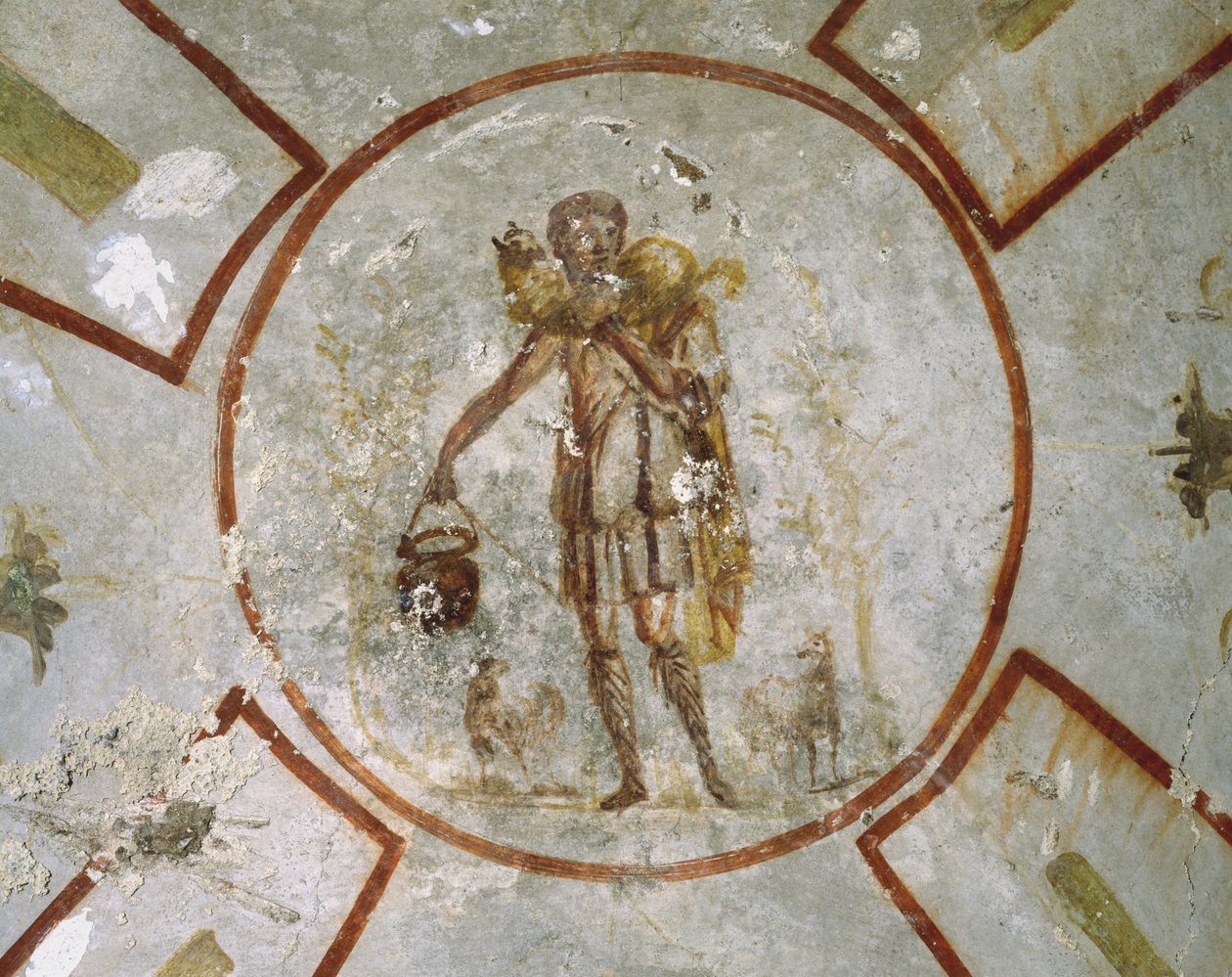
- Christ as the Good Shepherd;
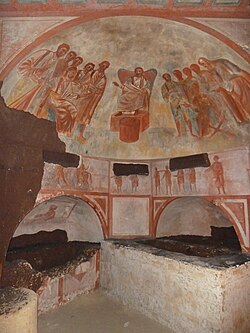
- Biblical events;
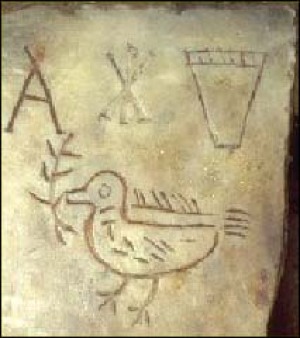
fish, pigeons;
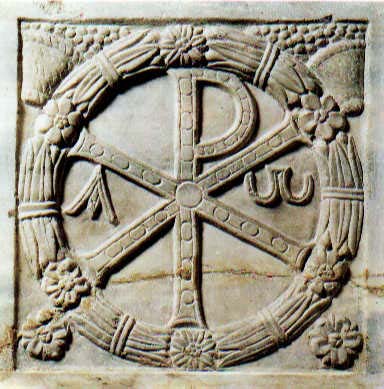
The Chi-Rho is one of the oldest Christian symbols for Jesus Christ. It consists of the Greek letters Χ (Chi) and Ρ (Rho), the first letters of ChristosChrist. The Alpha (Α) and Omega (Ω) referring to Christ as "The First and the Last" (Revelation 22:13). The symbol became especially known in the fourth century by Emperor Constantine. According to Lactantius, he received before the Battle of the Milvian Bridge in 312 In a dream, he was commanded to place a sign of Christ on the shields of his soldiers. Eusebius later described the imperial labarum, on which the Chi-Rho gained an important place. Afterwards, the symbol frequently appeared on early Christian coins, sarcophagi, mosaics, and ecclesiastical objects.
After the end of the great Roman persecutions of Christians in the fourth century, churches could be built openly and Christian art further developed.
Monumental mosaics, frescoes and images of Christ, Mary, the apostles and the saints became increasingly prominent in church buildings.
Old icons that have been preserved
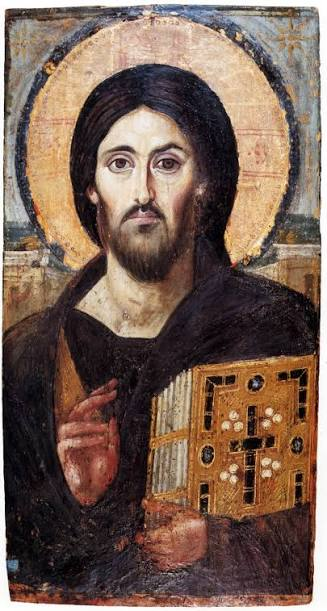
One of the most important places for the history of icons is the Monastery of Saint Catherine on Mount Sinai in Egypt.
There are some very old icons that have survived the destructions and conflicts of later centuries.
A famous example is the Christ Pantocrator from around the sixth century. Christ is depicted with the Gospel in one hand and the other hand raised in blessing.
This type of Christ icon would later become one of the most well-known representations within the Orthodox Church.
THE IMAGE STRUGGLE
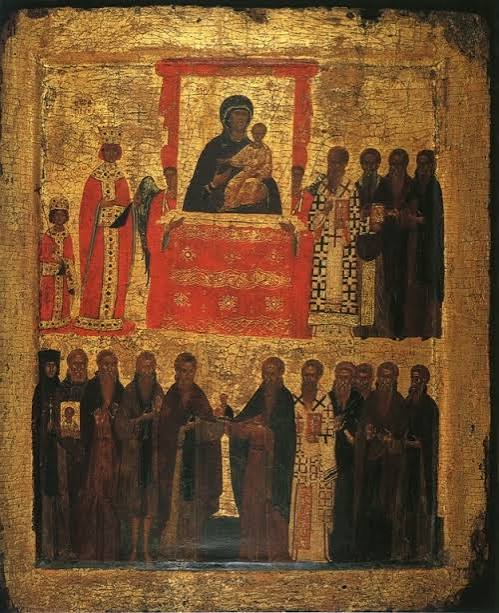
In the eighth and ninth centuries, a fierce struggle arose within the Byzantine Empire over the use of holy images.
Opponents of icons are iconoclasts referred to. They believed, among other things, that the veneration of icons could be in conflict with the prohibition of idolatry.
Many icons were destroyed during these periods, and defenders of icons were persecuted.
On the other side were Christians who defended the use of icons. One of the most well-known theologians among them was Saint John of Damascus.
For him, the discussion ultimately had everything to do with Christ:
If the Son of God truly took on flesh and became a visible man, He can also be depicted in His human form.
The Seventh Ecumenical Council
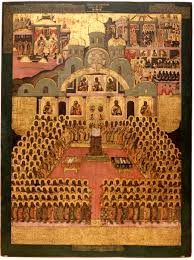
In 787 came it Second Council of Nicaea, known within the Orthodox Church as the Seventh Ecumenical Council, convened.
The council defended the rightful use and veneration of icons, distinguishing between the reverence for a holy image and the worship that is due only to God.
The iconoclast struggle was not immediately over.
Fit in 843 the veneration of icons in Constantinople was definitively restored.
This event is still commemorated every year in the Orthodox Church on the first Sunday of Lent, known as the Sunday of Orthodoxy.
THE DEVELOPMENT OF THE ICON TRADITION
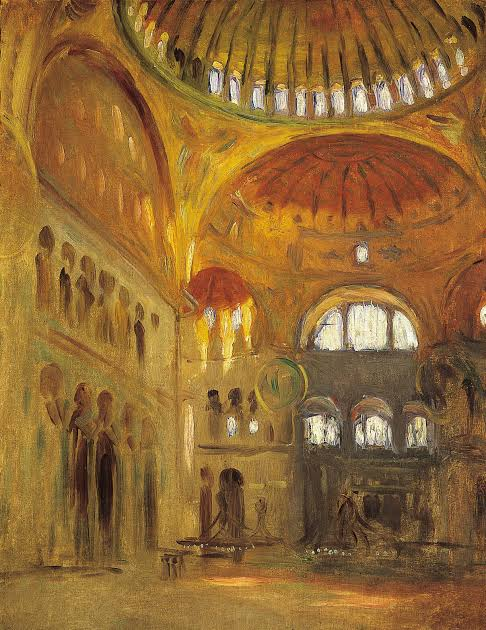
In the centuries that followed, various regional traditions emerged.
Icon art developed in, among other places:
Constantinople and the Byzantine Empire
Many forms and compositions originated here that were later adopted throughout the entire Orthodox world.
Greece and the Holy Mountain Athos
Monasteries played an important role in preserving and passing on the iconographic tradition.
the Balkans
In Serbia, Bulgaria, Romania, and other areas, distinct regional styles emerged within the same broader Orthodox tradition.
Russia
After the Christianization of the Kievan Rus in the tenth century, a rich Slavic icon tradition developed. One of the most famous icon painters is the saint Andrej Roebljov, known for his icon of the Holy Trinity.
Despite differences in style, a common theological and liturgical imagery remained.
THE LANGUAGE OF AN ICON
Many elements of an icon have meaning.
The gold
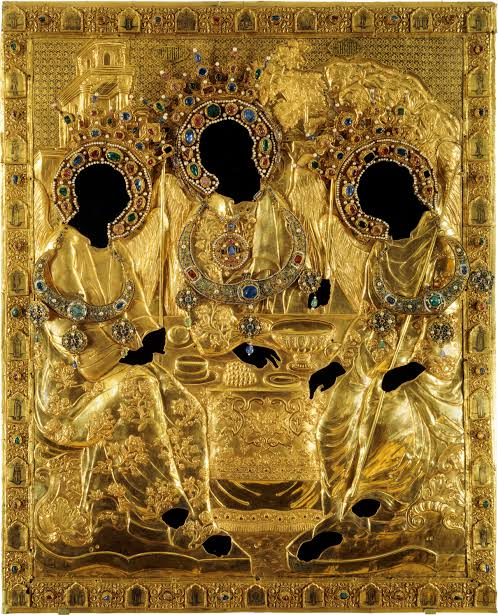
A golden background usually does not attempt to represent an ordinary earthly environment. It can refer to divine light and to a reality that is not constrained by ordinary time and space.
The halo
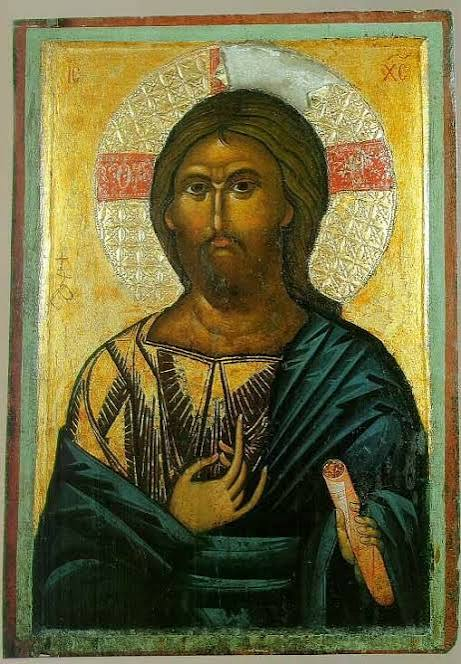
A halo around the head of a saint refers to the light of God in which the saint shares.
In Christ, the halo has a special shape: it often features a cross depicted within it.
The eyes
The eyes are prominently present in many icons. They can emphasize spiritual attention and inner vigilance.
Perspective
Icons do not always follow the natural perspective of Western painting. Some compositions use a form of so-called reverse perspective, causing the depiction to seemingly open up towards the viewer.
Inscriptions
Icons often feature names and abbreviations. They clarify who or what is depicted and are part of traditional iconography.
ICONS IN THE DIVINE LITURGY
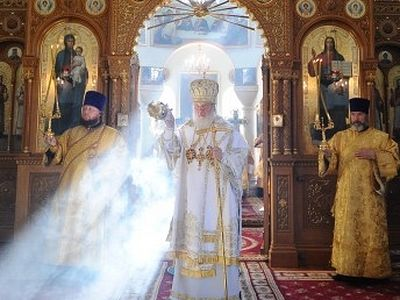
Icons are not separate from the prayer of the Church.
In an Orthodox church building, there is often a separation between the altar area and the nave. iconostasis: a wall or screen with icons.
Typically, important images of Christ, the Mother of God, saints, and church festivals are found there.
During the services:
- are icons venerated;
- believers can bow for it;
- are icons kissed;
- candles are lit for it;
- certain icons are particularly venerated during church festivals.
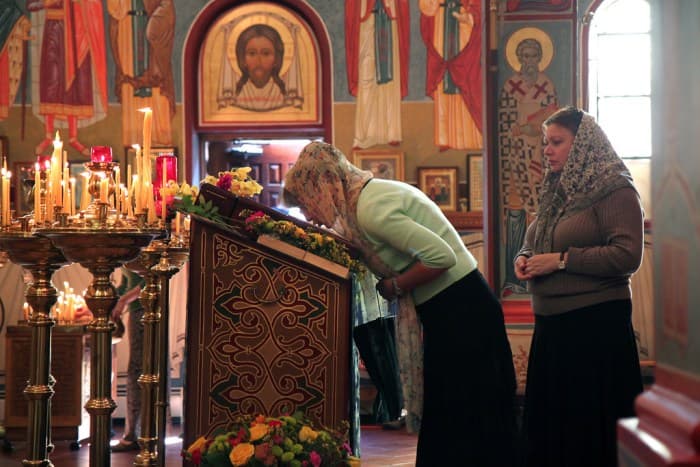
Icons are an integral part of the same liturgical world as prayer, song, candlelight, and incense.
ICONS IN DAILY LIFE
Icons are not only found in church buildings.
Many Orthodox families have a prayer corner with icons. For example, there can be an icon of Christ, the Mother of God, and the patron saints of the family. In the morning and in the evening, one can stand before these icons to pray.
The thought of the image goes even deeper within the Christian faith. In Genesis we read that man is created in the image and likeness of God (Genesis 1:26–27). In that sense, every human being can be seen as a living bearer of God's image. The same Greek word eikōn, of which our word icon origin comes from, means "image".
This also gives meaning to the way Christians view other people: every person possesses a God-given dignity and is called to increasingly resemble Christ.
Thus, the icon forms a connection between the prayer life in the church, personal prayer at home, and daily life with other people. Not only painted icons refer to God; humanity itself is created in His image.
AN ICON POINTS BEYOND ITSELF
The meaning of an icon ultimately does not lie in the wood, the paint, or the artwork itself.
An icon wants to help the believer focus on Christ, the Gospel, and Life with GodTherefore, icons within Orthodox Christianity are not simply regarded as religious art or decoration. They belong to a living tradition of prayer, theology, and worship that has developed over many centuries.
For someone entering an Orthodox church for the first time, icons may seem strange or impressive. However, those who learn their language and history discover that they point ever further than themselves.
The painted icon refers to the person being depicted, while the human being is created in God's image. Both remind us that the Christian faith ultimately revolves around communion with God and the transformation of man in Christ.